Projects
Installations
A desinstallation is an artistic configuration designed not to construct meaning but to dismantle the perceptual and conceptual structures through which meaning stabilises. Where installation art traditionally assembles objects, sounds, images, and spatial relations to produce an immersive environment of interpretation, the desinstallation performs the opposite movement. Its elements — sound, language, objects, silence — operate as agents of conceptual disassembly.


Aprocryphal library
The Apocryphal Library is a constellation of fictional texts, authors, manifestoes, and references that adopt the formal language of knowledge to test its conditions of legitimacy. Situated between archive and invention, it assembles works that are neither entirely false nor verifiably true, but operational: capable of circulating, being cited, and producing effects. The library exposes how authority is constructed through form, repetition, and recognition. Rather than correcting reality, it manufactures plausible frameworks in which the boundaries of knowledge, authorship, and credibility can be displaced.


Performative protocols
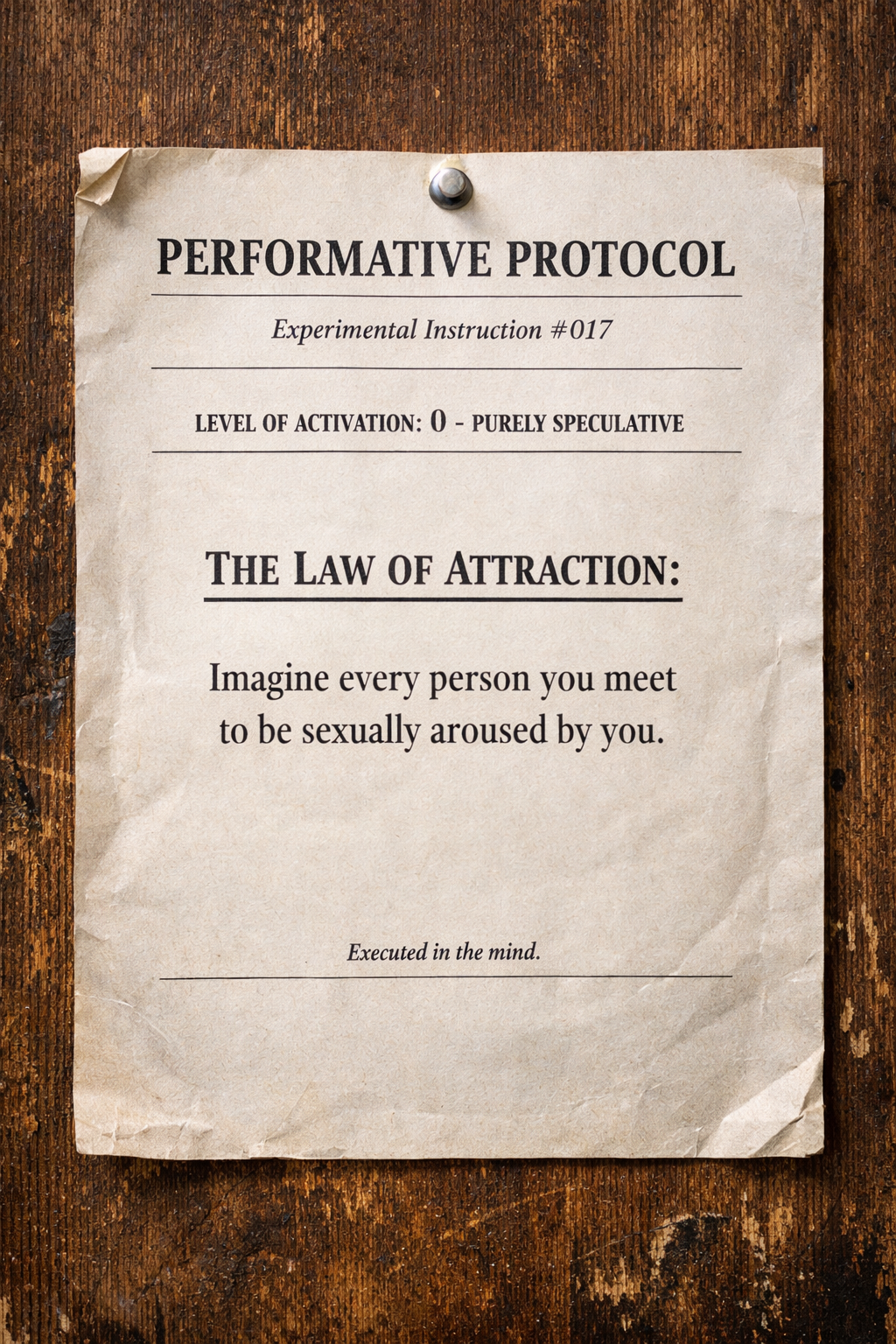
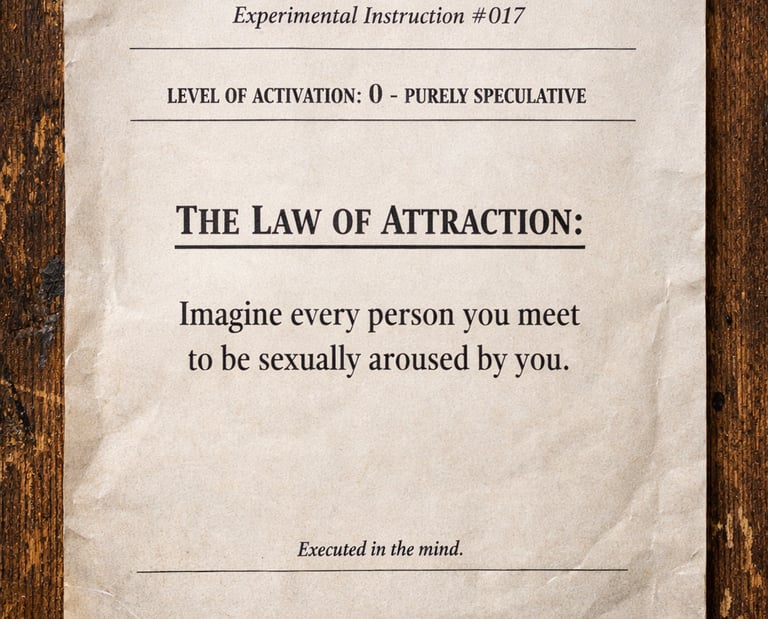
Performative Protocols are dispositifs designed to be enacted rather than merely read. They take the form of instructions, procedures, rituals or operational frameworks that, once activated, produce real effects — symbolic, social, psychological or political. Situated between art, bureaucracy and performance, these protocols expose how power operates through forms, rules and gestures.
Performative practices
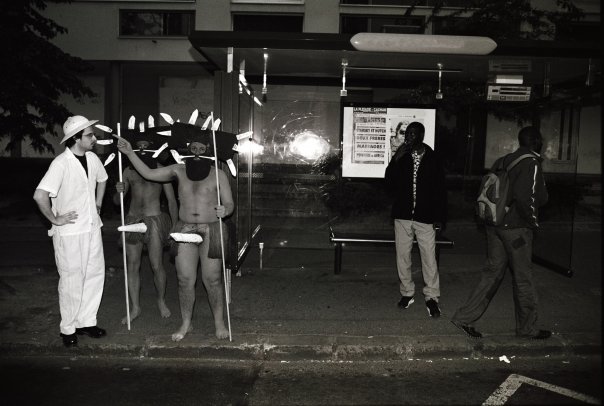
Performance, in my work, serves as a space of disruption. I use it to challenge the viewer’s role as passive spectator—filming audiences, reversing the gaze, and making them part of the act. I’ve projected media imagery onto naked bodies, collapsing the distance between the personal and the political, and invoked absurd echoes of uncomfortable histories to unsettle inherited narratives. These performances aren’t about expression, but exposure—making visible the roles we all play in shaping, accepting, or forgetting the stories we’re told.
Epistemic projects
These projects investigate the manufacture of reality itself. Through the Manufacture of the Real podcast and the TEAL (Transformation Ethics and Aesthetics Lab), they explore how narratives, systems, and technologies shape perception, ethics, and collective transformation.
Memethics
Memeology examines memes as cultural vectors rather than trivial amusements: compressed symbolic forms that circulate, mutate, and shape collective perception through speed, repetition, and affect. Memes do not merely reflect reality; they actively produce it, bypassing deliberation and embedding ideas, emotions, and norms before they can be critically examined. Within this framework, memethics addresses the question of accountability — the responsibility for the effects memes generate once released into circulation, when authorship dissolves, but consequences persist. Together, memieology and memethics form a critical lens on virality as a force that reshapes political imagination, moral thresholds, and social responsibility.