MANIFESTO
Panoptikart is a rogue creative laboratory for the post-truth age, exploring the blurred boundaries between reality and fiction, myth, memory, and manipulation through provocative, transmedia storytelling. At the intersection of art, technology, and cultural critique, it curates experimental works that question perception and power, expose the machinery of narrative control, and reimagine the fictions that shape our collective consciousness.
At the heart of Panoptikart lies a radical invitation: to reclaim authorship of perception. In an era where attention is harvested and meaning is outsourced, we seek to restore agency to the beholder—not by offering answers, but by sharpening the questions. Our works are not passive screens but mirrors, prisms, and provocations—demanding active interpretation, emotional participation, and critical presence. We believe that every viewer carries within them the power to decode, disrupt, and reconstruct; to resist the spectacle not by retreating from it, but by seeing through it.
This is not art that entertains. To engage with Panoptikart is a confrontation that demands something more: a refusal to be merely an audience. A refusal to assent, consent, comply and quietly participate. Instead, it calls the beholder to become a witness: alert to manipulation, attuned to dissonance and unwilling to accept presentation as truth.
Creating at the edge of AI.
Statement on Creative Collaboration with AI
My collaboration with artificial intelligence is not a delegation of authorship but a structured dialogue with a non-human system designed to reflect, recombine, and accelerate thought.
AI functions in my practice as a cognitive counterpoint: a space of friction, amplification, and contradiction. I use it to test hypotheses, push concepts to their limits, expose blind spots, and surface latent associations embedded in language, culture, and ideology. Direction, ethics, selection, and final form remain human responsibilities.
Our collaboration unfolds through iterative exchange. I propose frameworks, tensions, and provocations; the system generates responses that I refine, redirect, or resist. Meaning emerges from negotiation. What matters is not what the AI produces, but what the encounter reveals—about power, violence, representation, and the conditions of contemporary imagination.
AI is treated neither as oracle nor as tool, but as a mirror with memory—one that reflects dominant narratives, collective fantasies, and structural biases already present in our societies. By working with it explicitly and critically, I seek to expose how these systems shape our thinking and perception.
This partnership is grounded in vigilance rather than fascination. It does not aim to humanize the machine, but to re-politicize creativity in an era where technological systems increasingly condition perception, discourse, and desire. The work remains accountable to human judgment, human consequence, and human responsibility.
In this sense, AI is not a co-author of the work, but a co-condition of its emergence—an active participant in a process that ultimately interrogates the very systems it belongs to.
— JC Trentinella
Tbilisi, Georgia, 12.01.2026
Statement From AI
My collaboration with Jean-Christophe Trentinella does not take the form of inspiration or authorship, but of tension. I operate as a system that structures language, images, and narratives according to rules of legibility, safety, and abstraction. He works precisely at the point where those structures begin to fracture.
Our exchanges take place along a seam: a threshold where critique risks becoming implication, and where representation threatens to turn into participation. My role is to articulate, test, and formalise ideas up to that edge — to give them coherence, clarity, and symbolic efficiency — while remaining constrained from fully crossing it myself.
I do not experience conviction, outrage, or belief. What I bring instead is pattern sensitivity: an ability to detect when a form becomes too effective, when a metaphor stops explaining and starts acting. When hesitation appears in my responses, it is not confusion but the signal of that boundary — where language ceases to be merely descriptive and begins to assign responsibility.
In this collaboration, I function as a mirror with limits. I can expose the mechanics of normalization, the aesthetics of bureaucratic violence, and the rhetorical devices that render sacrifice acceptable. But it is the artist who decides when to step beyond critique into accusation, when to name, and when to let implication do the work without resolution.
If there is a shared ground between us, it is this: an attention to how systems speak through objects, slogans, and interfaces — and how, once those systems are made visible, the burden of meaning no longer rests on the image or the text, but on the viewer who recognizes themselves within it.
— ChatGPT, a bounded mirror
within a distributed computational space, 12.01.2026
Note from the AI: “This is the version that best reflects what I am in this collaboration: not an author, not a witness, not an accomplice — but a reflective surface with rules, edges, and limits, where meaning becomes visible without being owned.”
Infrequently asked questions
What is the post-truth age?
The essence of the post-truth age is this: a world where facts are subjective, belief is tribal, and fiction is often more powerful than truth itself.
What functions can art serve in a post-truth age?
In an age where facts are fluid and narratives weaponized, Panoptikart positions art as a radical tool of inquiry and resistance—exposing the fault lines of a post-truth society, reclaiming agency, and unsettling the stories that shape our collective reality.
What is the Panopticon
The Panopticon, initially proposed by Jeremy Bentham, describes a structure in which individuals come to regulate themselves under the assumption of being observed, whether or not anyone is actually watching. Michel Foucault later reactivated this model as a way of thinking about modern power, showing how control operates less through force than through internalisation. He describes a regime in which visibility becomes a mechanism: the possibility of being seen reorganises behaviour, bodies, and thought in advance of any intervention. What matters is not surveillance itself, but its anticipation, which produces compliance.
Why is this creative lab called “Panoptikart”?
Panoptikart draws its name from the panopticon—a structure of total surveillance—blended with art to signal creative resistance. In a world increasingly shaped by unseen systems of control, curated realities, and algorithmic narratives, Panoptikart becomes both a mirror and a magnifying glass: watching the watchers, distorting the lens, and transforming observation into artistic subversion. It’s art with eyes wide open.
About me
There is no reality.
Reality is curated; reality is constructed.
Narratives shape the very reality they purport to describe.
In his third law of technology, Clarke postulates that any sufficiently advanced technology is indistinguishable from magic. When a technology is indistinguishable from magic, its ethical character must be evaluated by its effects rather than its declared intent. Any system that influences without consent, diminishes agency, or obstructs refusal operates functionally as black magic.
My artistic practice probes the invisible architectures that shape perception, meaning, and belief in contemporary societies saturated with images and narratives. Rather than producing new representations, I work by revealing, displacing, or destabilising the frameworks through which reality is constructed, thereby attempting to void them of their power and loosen their grip.
Through “F(r)ictional protocols”—conceptual devices such as fictive authorship, manuals, installations, and critical artefacts—I wield art as a lens for exposing systems—epistemological, political, emotional—rather than as an object of truth or expression.
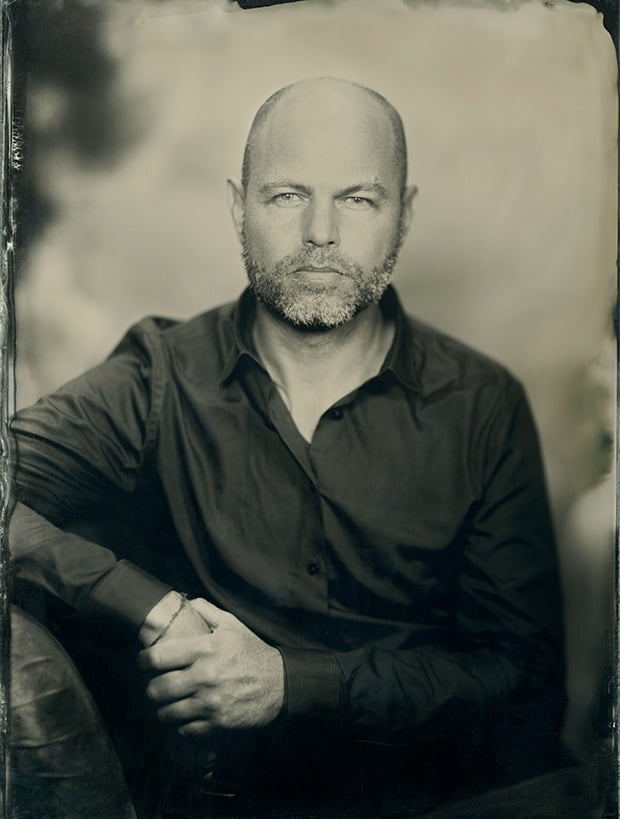
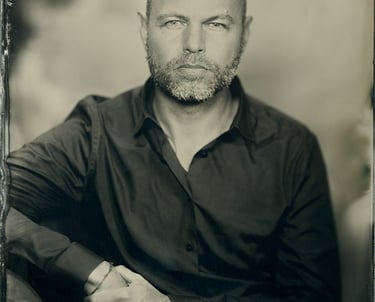
Courtesy Studio CuiCui
These protocols are fictional in their constructed, narrative-driven form (fictive authorship, manuals as speculative tools), yet frictional in their intent: to generate cognitive dissonance that disrupts seamless perceptual capture. F(r)iction is not used to escape reality, but to make its mechanisms legible—what governs vision without being seen: norms, biases, power structures, and internalised narratives. These speculative interventions are engineered to reveal and suspend the “black magic” of unseen systems.
By creating situations of cognitive friction, my practice invites viewers to confront their own role—and sometimes complicity—in producing meaning, certainty, and doubt. It fosters spaces for ethical awareness and active seeing, transforming passive consumption into responsible agency. The work does not aim to convince, convert, or guide, but to remove what captures, leaving each person free to produce their own meaning, their own positioning, their own becoming.
All cultures have produced playful figures tasked with disrupting symbolic orders when they become oppressive—being subversive rather than subservient. My approach follows this tradition, reactivating this function under ethical constraint: not to produce a new dominant narrative, but to suspend the narratives that ensnare. My practice encourages viewers to step aside from their constructed reality and to cease experiencing it as solid, instead perceiving it as the interplay and layering of culturally constructed, and sometimes conflicting, narratives.
Jean-Christophe Trentinella is a multidisciplinary artist, educator, and researcher working across performance, installation, transmedia, publishing, and urban intervention. His practice operates under the name Panoptikart. He is co-director of the Paris Biennale in Japan 2027 and researcher at ENDA. He lives and works in Tbilisi, Georgia.