Archives
Performance art
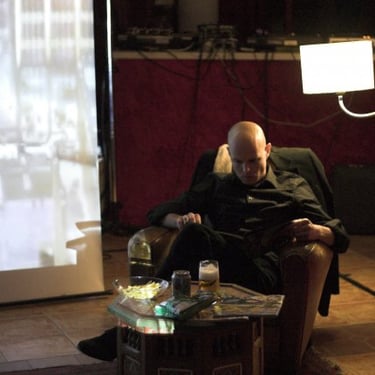
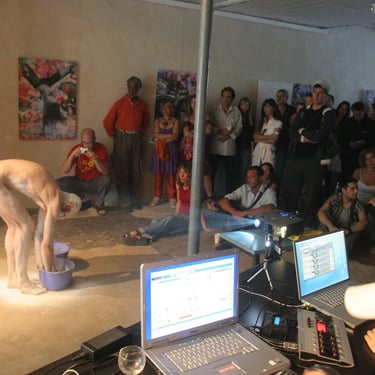
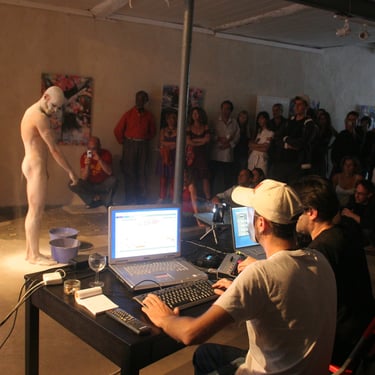
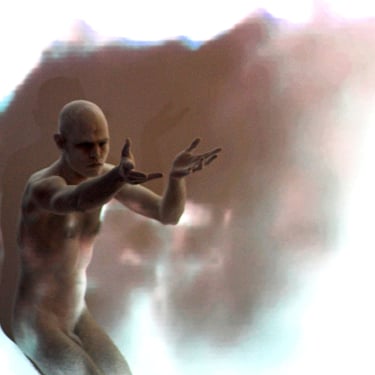
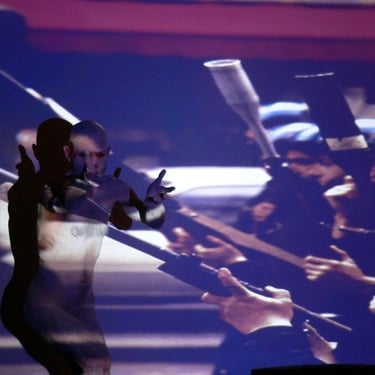
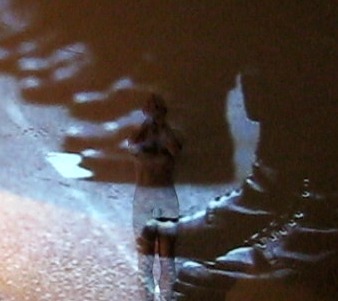
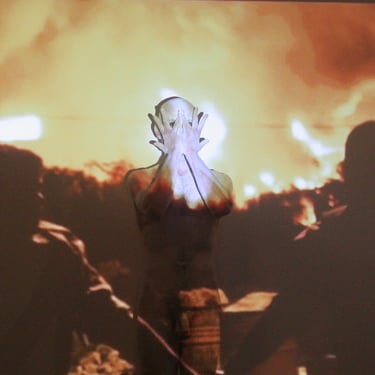
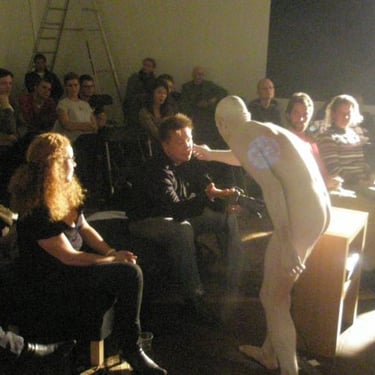
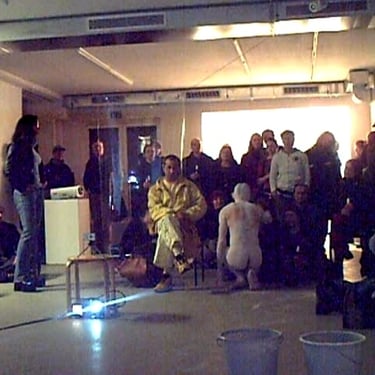
Most of my performance work revolved around the fictional character of Zimmer, an everyman navigating the impossibility of fully believing the reality presented to him. Performances were structured as dispositifs in which images—drawn from the continuous flow of media news, depicting violence, uprisings, and ecological crises—were projected onto Zimmer’s body, immersing him in the relentless influx of global information. The work also included the live filming of performances, projected back onto screens, creating a recursive reflection in which audiences witness themselves witnessing Zimmer. At pivotal moments, as Zimmer’s body became naked, the camera turned toward the audience, forcing confrontation with their own complicity in observing, consuming, and negotiating mediated realities. Through this layering, the project interrogates embodiment, perception, and the contemporary media, positioning the body as a site of vulnerability and a mirror for collective consciousness.

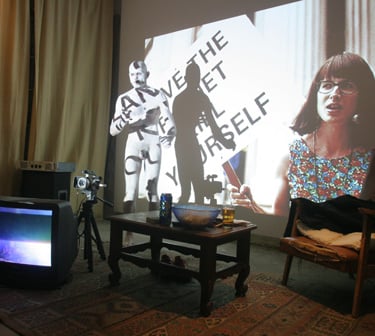
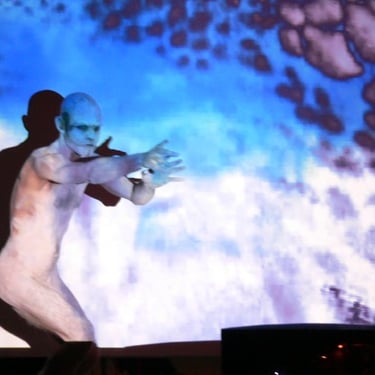
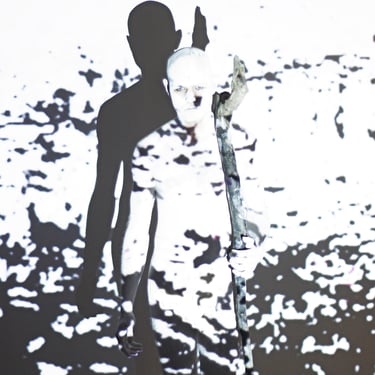
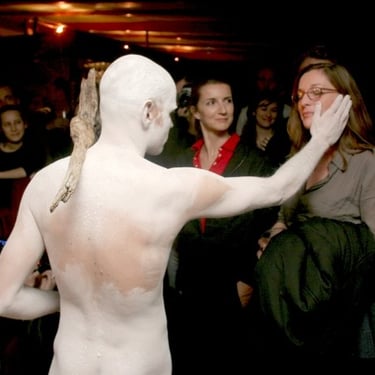
The dream of the sand people
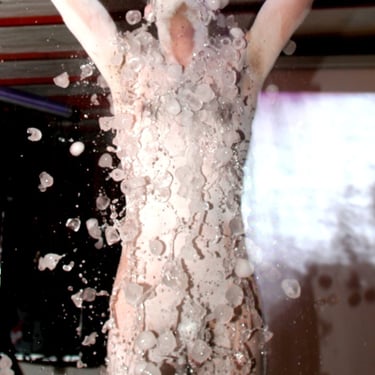
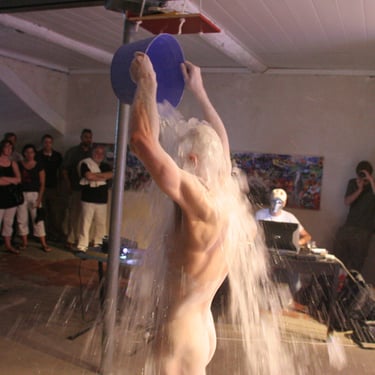
The Dream of the Sand People (2007–2010) is a multi-disciplinary project combining performance, visual, and digital arts, imagining a Namibian tribe whose silent ritual dance summons life and rain in the vast, fragile desert of Deadvlei. By situating ephemeral, earth-covered bodies within this extreme landscape, the work explores human ecology: how environments shape perception, presence, and states of collective awareness. The desert becomes a reflective agent, amplifying tensions between vulnerability and endurance, silence and gesture, imagination and reality. Through workshops and international collaborations, the project aimed at fostering cross-cultural dialogue and critically examining how place, memory, and human action co-emerge to sustain cultural and symbolic life. Though the project was not completed as originally envisioned, it generated a short animation film, and it remains my hope to bring it to fruition.
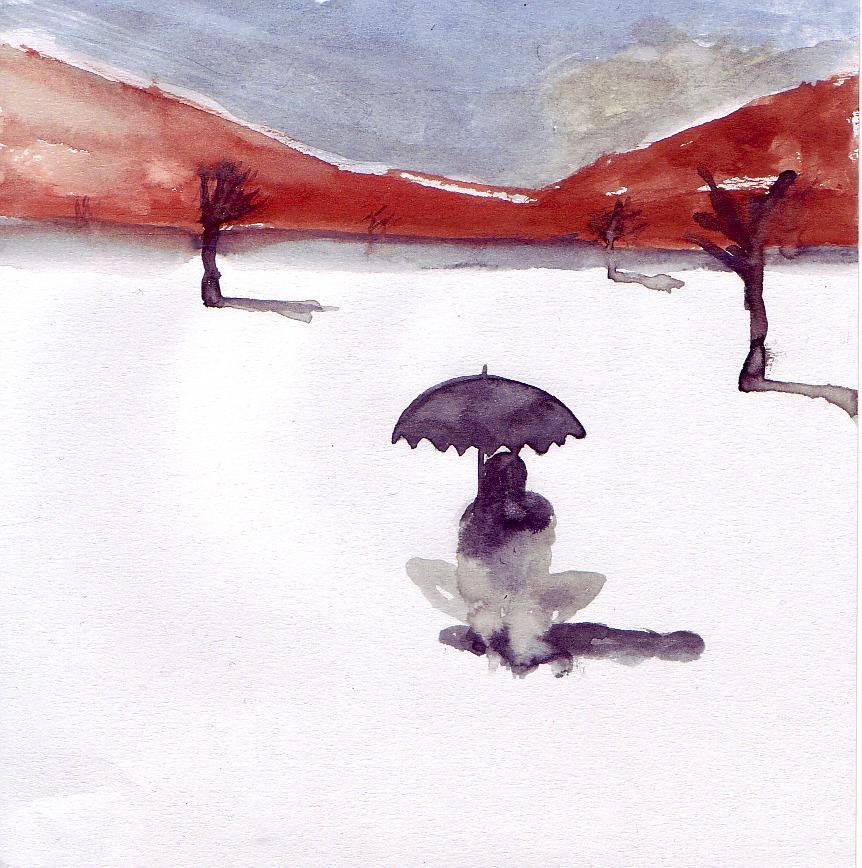
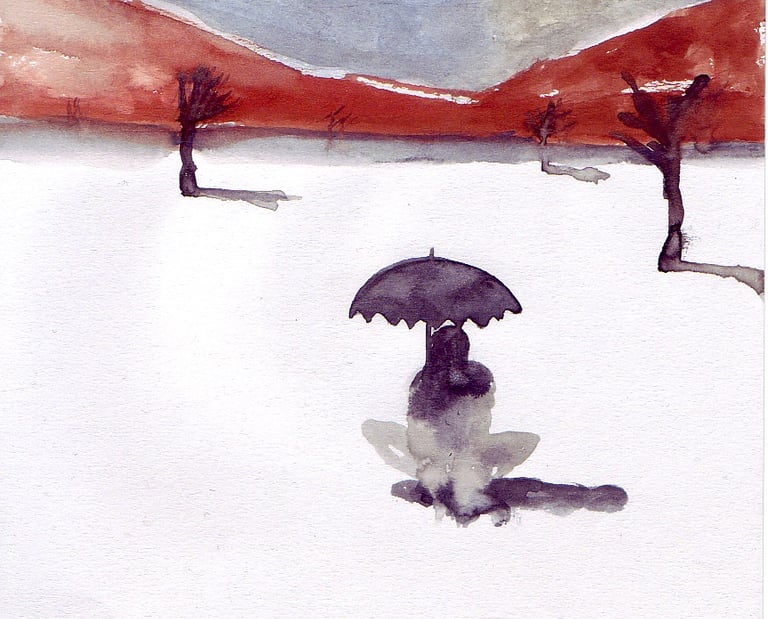
Drawing by David Bouchacourt
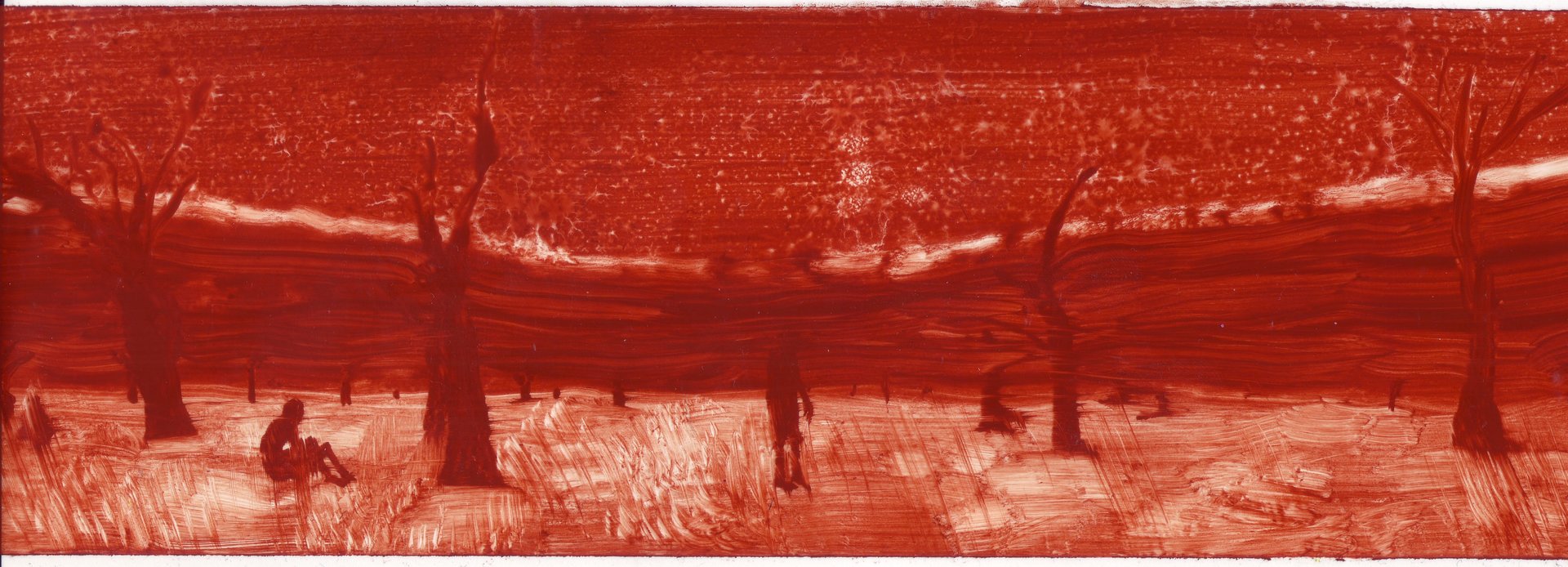
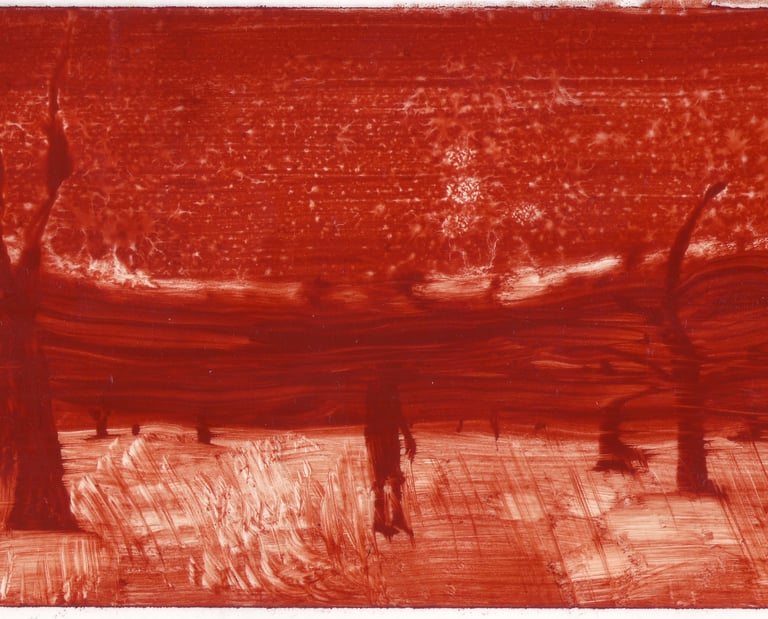

Animation by Nino Leselidze
Painting by David Bouchacourt
Swami Baba
Drawing on our personal observations and growing reluctance toward hierarchical structures and mind-control mechanisms encountered within spiritual communities we attended, visual artist David Bouchacourt and I developed the fictional character of Sri Bhagavan Swami Baba—an ambivalent guru figure conceived as a lens through which to interrogate spiritual authority, legitimacy, and the abuse of power. The project emerged from lived proximity rather than external critique, using performance to explore how authority is constructed, embodied, and sustained through belief, ritual, and the circulation of charisma. Sri Bhagavan Swami Baba—a series of honorific titles—embodies the exotic “wise man,” a cultural and literary trope often deployed to expose social and cultural dysfunctions. In our work, this trope was mobilized deliberately as a reflective instrument, turning familiar fantasies of authority and wisdom into a space for critical inquiry.
Crucially, Baba’s character is contradictory and co-emergent: he is blatantly racist, misogynist, materialistic, and manipulative, yet interspersed with genuine insights into culture, society, and human behavior. These flashes of authentic understanding are not negated by the abusive or coercive dimensions of his persona; rather, they exist entangled with power, ego, and moral compromise. The work foregrounds this tension, demonstrating that insight and oppression can coexist, and that wisdom can be inseparable from the structures and personalities through which it is mediated. This ambivalence allowed the performances to interrogate the ethical, psychological, and structural mechanisms by which authority is both respected and exploited.
I performed the role of Baba’s French translator, an intermediary position that proved central to the conceptual architecture. This duo enabled the staging of layered and circulating forms of domination: Baba’s authority over his disciples, his control over the translator, and the translator’s delegated power over other adepts. Power was not presented as unilateral but as relational, mediated, and complicit—circulating through access, interpretation, and the promise of wisdom, often functioning as a transactional exchange for money, sex, and favors. By emphasizing the morally and socially corrosive dimensions of Baba’s personality alongside the genuine insights embedded within it, the work illuminated the complex entanglement of knowledge, authority, and ethical responsibility.

Across a series of live performances and improvised video works, the character oscillated between manipulation and insight, humor and coercion, exposing the fragile boundary between authentic wisdom and theatrical simulation. A feature-length video project was filmed but ultimately remained unedited and unfinished; nevertheless, the process itself constituted a rigorous investigation into the dynamics of belief, the performance of enlightenment, and the hierarchical reproduction of authority within spiritual and pedagogical systems.
The work elicited strongly contradictory reactions within the spiritual circles in which we were enrolled. Some audiences recognized the mechanisms of authority and control as clearly rendered, reading the performances as a lucid exposure of dynamics they themselves had observed or experienced. Others reacted with shock or rejection, perceiving the work as heretical or threatening. These polarized responses became part of the project’s significance, revealing the fragility of belief systems, the affective stakes involved in questioning spiritual legitimacy, and the ethical complexity inherent in encounters with knowledge and authority that are both illuminating and destructive.
His Holiness Shri Baghawan Swami Baba - Bath Teahings
Spoken-word poetry
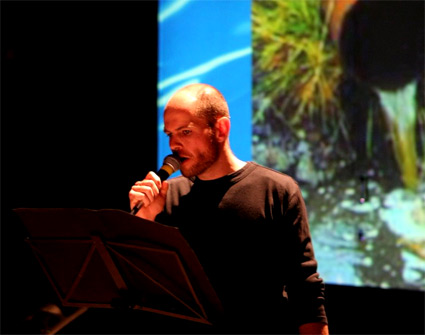
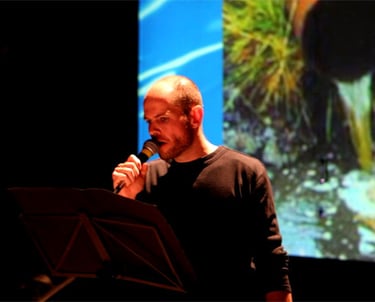
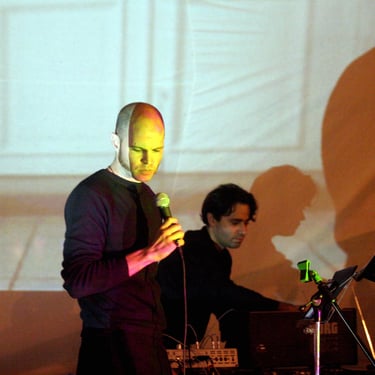
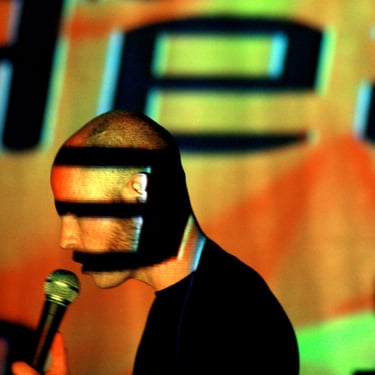
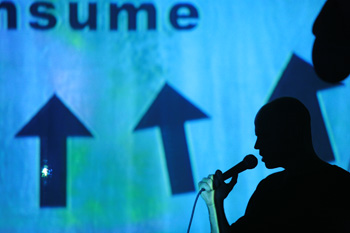
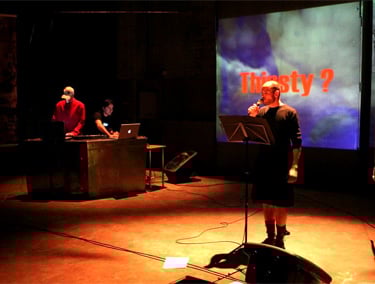
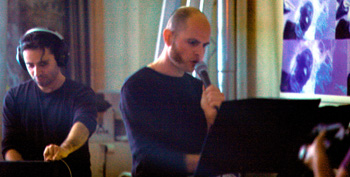
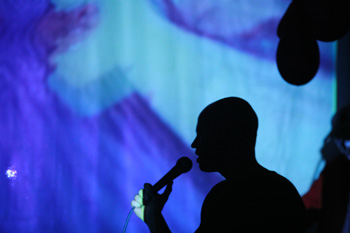
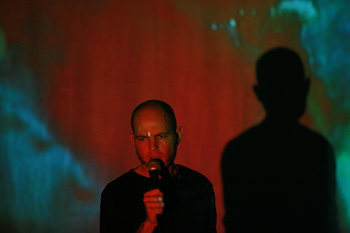
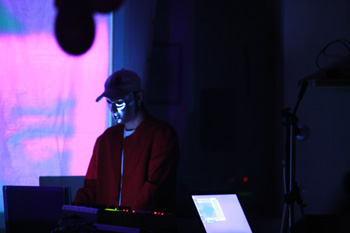
My early spoken word poetry emerged at the intersection of the 1960s Anglo-American spoken word movement and France’s Poésie Sonore, combining written texts with performative recomposition alongside improvised music in collaboration with electronic musician Neuromancie.
Central to these performances, though not always explicit, was Zimmer, an everyman whose belief in himself and in the layered narratives of the world erodes, leaving him uncertain and disoriented. The work explored personal perception from the subject’s point of view, interrogating how identity and understanding fracture under continuous sensory and cultural input.
Performed at festivals across Canada, Europe and Namibia, the pieces foreshadowed my later focus on cultural narratives and collective meaning-making. This early work was as much an experiment in improvisation and spatial resonance as it was a self-reflective inquiry into the instability of perception, anticipating my sustained engagement with how humans negotiate layered realities.

Les Papourisiens
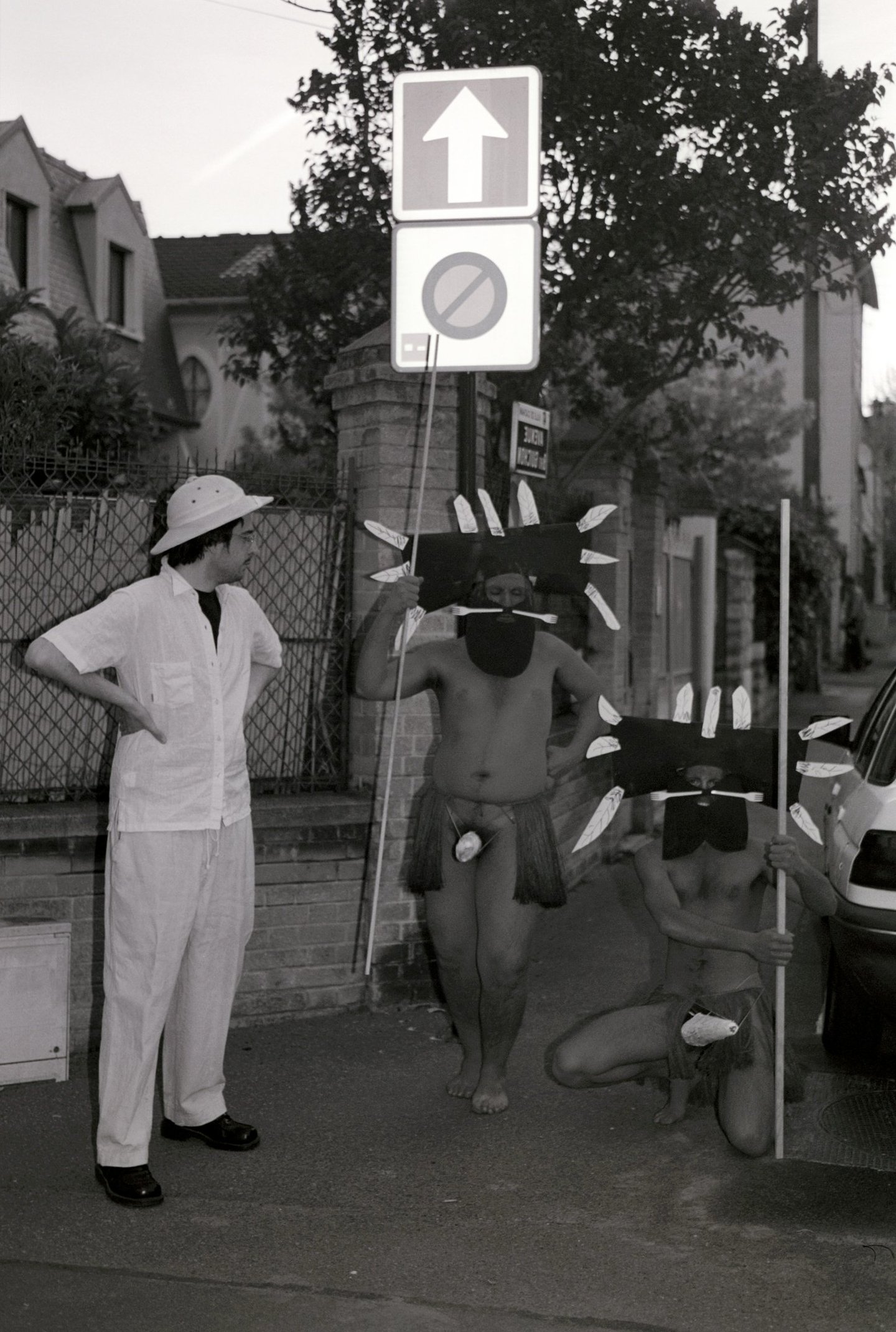
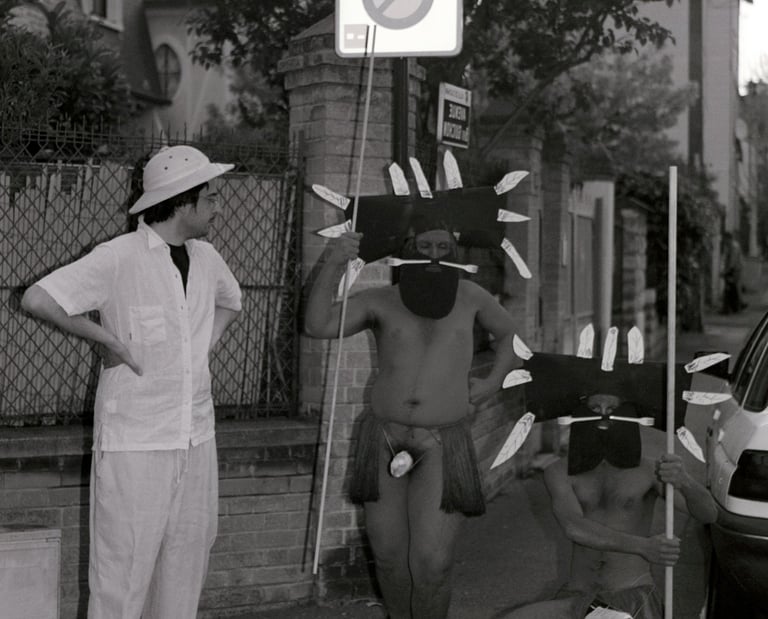
Les Papourisiens — literally “The Papuans from Paris” — interrogates colonial imaginaries and positions Western power as the “savage” force impacting traditional societies.
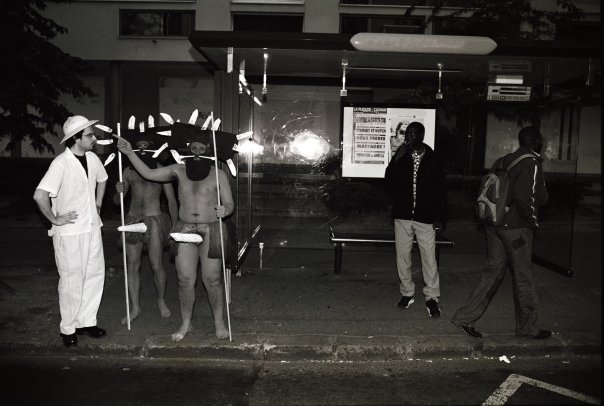
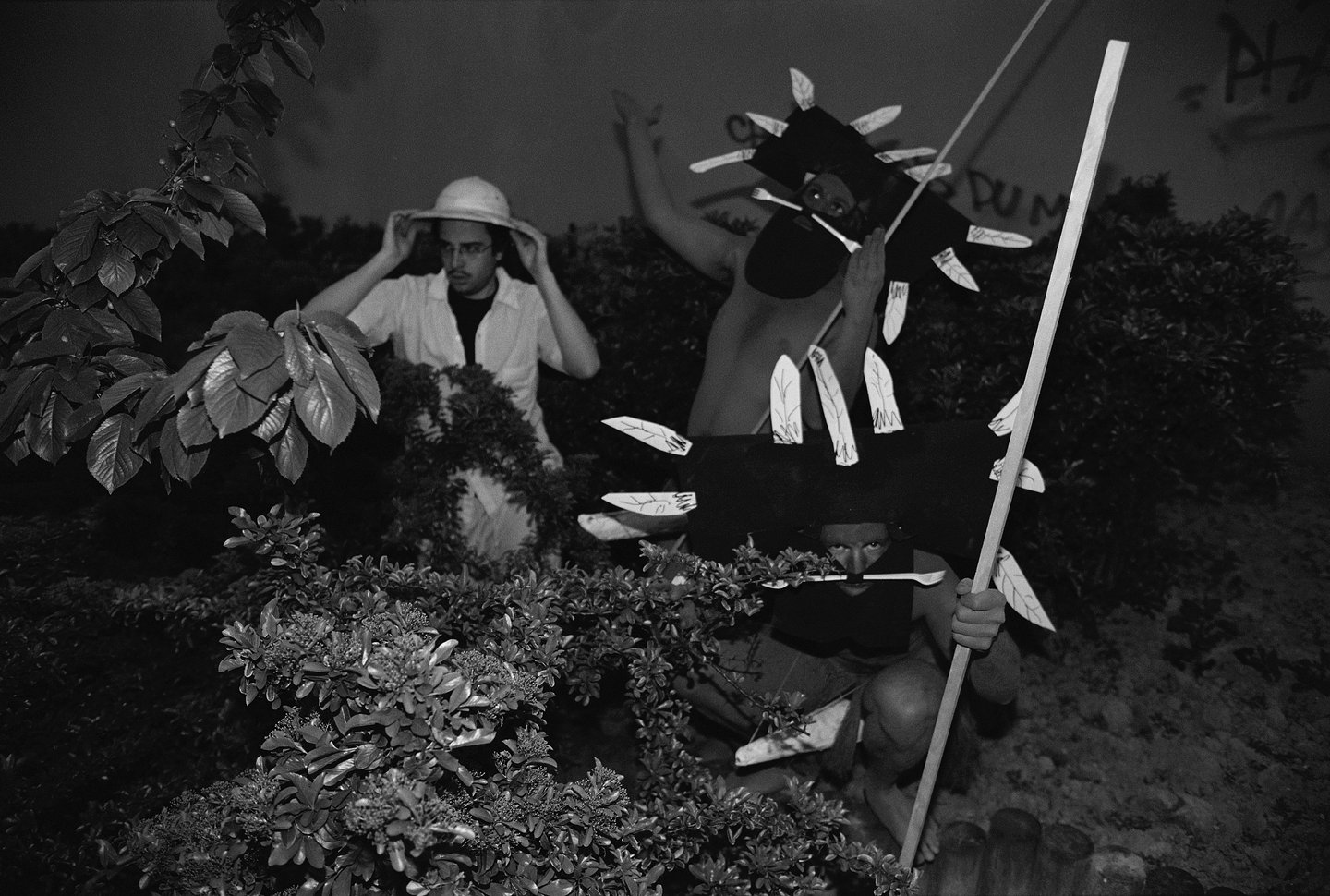
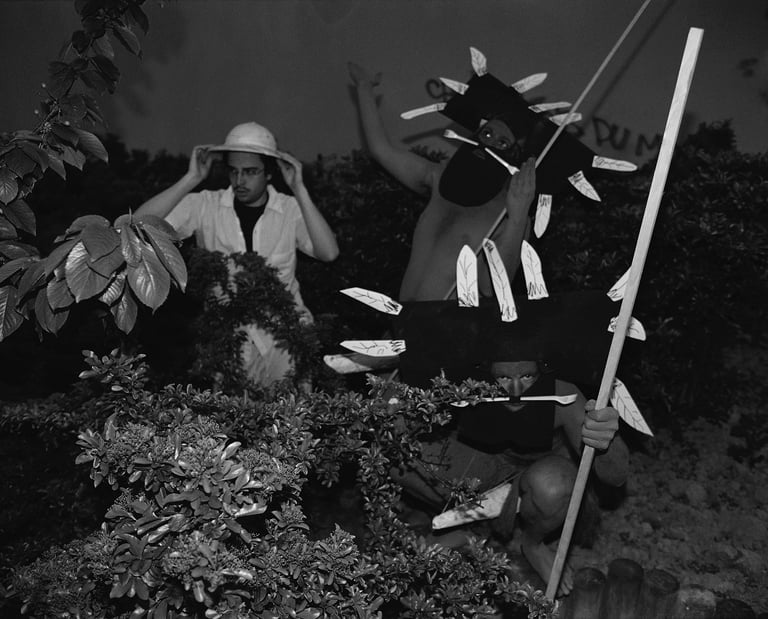
Les Papourisiens took place in the Paris suburb of Cachan and involved deconstructed and reconstructed characters called “Papous,” purportedly from Papua New Guinea. At the time, I had recently returned from several months in Vanuatu, Melanesia, where I witnessed firsthand the pressures of globalization on small island communities. Populations concentrated on the main island, drawn by access to imported goods and emerging capitalist logics, often falling into poverty and slums. During this period, I collaborated with the Ministry of Education to develop programs highlighting the nutritional value of local foods compared to imported ones, revealing the economic and cultural impact of globalized consumption on local health and society. Les Papourisiens emerged from this encounter, exploring the figure of the so-called “savage” imported into modernity through nineteenth- and twentieth-century colonial and ethnographic fantasies.
Conceptually, the work was also grounded in my earlier study of cultural studies at the University of North Carolina (1999–2000), where I discovered decolonial thought and critical theory. These frameworks provided tools to interrogate historical constructions of otherness, the imposition of Western modernity, and the mechanisms of cultural projection. The performance staged these ideas in a contemporary suburban environment largely inhabited by migrant communities, deliberately creating tension between historical fantasy and present social realities.
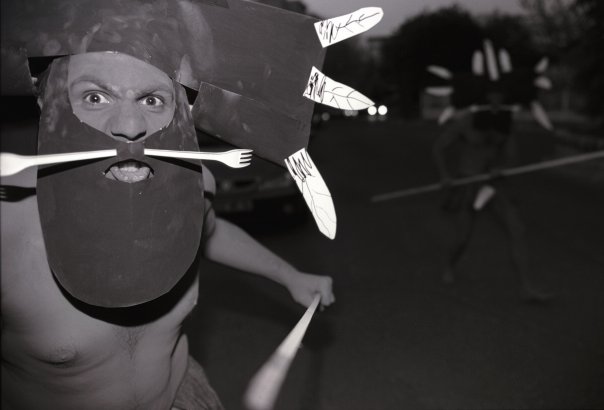
The performance involved multiple figures: the inhabitants of Cachan with whom we interacted, two fictional Melanesian men, and a colonialist figure in full white attire with a pith helmet. This addition created another layer of derealisation, situating historical authority and exoticisation within a late twentieth- and early twenty-first-century context. Costumes were deliberately constructed from non-realistic materials—paper, found objects, and plastic forks protruding from the nose—emphasizing the work as constructed fiction rather than ethnographic mimicry. This layering highlighted the circulation of power and fantasy across time, creating friction between historical imagery and contemporary social dynamics.
The strategy has echoes in later global visual culture, where colonial symbols continue to surface in unexpected ways. The pith helmet, for example, remains a potent marker of authority and racialized power. By mobilizing this symbol in Les Papourisiens, the work interrogated both the historical and ongoing resonance of colonial authority and the spectatorship it produces.
Conceptually, the piece positioned “we, the white colonizers” as agents of historical and ongoing violence: the “savage” force inflicting structural, cultural, and cognitive colonization on traditional societies, first through direct colonial domination and later through globalization. By embodying these dynamics through performance, the work highlighted how Western power circulates across time and space, leaving enduring imprints on societies, thought, and culture—even, perhaps particularly, in the foreign-inhabited suburbs of the capital of a former colonial power.
The ethical tension and discomfort were central, exposing the persistence of colonial imaginaries while emphasizing the impossibility of reducing culture or identity to a single, consumable image. Documentation from Les Papourisiens later entered a broader institutional context, including a photograph in the collective exhibition Hype at the Palais de Tokyo, Paris, in 2005. I recognize that in today’s conversations around cultural appropriation and racism, this work, inherently risky at the time, is even more so now; its interventions were conceived as a critical, reflexive interrogation rather than a claim to authority or authenticity, grounded in lived experience, historical knowledge, and theoretical study.